"Impossibility, like Wine / Exhilarates the Man/ Who tastes it"
(Emily Dickinson)

Saturday, January 10, 2015

Is Anybody Going to San Antone?


The San Antonio Cocktail Conference starts next Thursday, January 15. Here's Imbibe Magazine's list of seminars to catch.

The whole schedule is here.

I'm interested in this one:

THE RELATIVITY OF FLAVOR PAIRING 
The Last Word, Saturday, January 17, 1:30 - 2:45 p.m. 
Price: $45.00 
A scientifically insightful approach to pairing food with drinks, focusing on beer, spirits, and cocktails. We'll cover the science of flavor perception using all the senses and relating it to the format of the paired dinners. Exploring food and drink-centric cultures beyond our borders to give a true perspective on what it takes to give meaning to a spirits/cocktail/beer dinner. We'll take your spirited dinner from an unrelated food/brand showcase to an harmonic, convergent and synergic experience.

You know. For the theological implications.


But given the state of the academic job market, I should probably also hit up this one:

WHAT NOW? - CAREER OPPORTUNITIES FOR PROFESSIONAL BARTENDERS BEYOND THE BAR 
St. Anthony Hotel, Saturday, January 17, 11:00 a.m. - 12:15 p.m. 
Price: $35.00 
We live in an age where there is an unprecedented demand for highly skilled professional bartenders. With a demand like this there are scores of new career paths opening up for young men and women with the right training and correct motivation. Do you have what it takes? Panel Guests: Jason Kosmas (founder - 86 Co., co-founder - Employees Only NYC), Omar YeeFoon (Brand Ambassador - 86 Co.), Curtis Cheney (bartender turned distiller), and Bill Norris (writer/beverage director).


Friday, October 24, 2014

Crow Pot Pie Christianity

Even though most of my writing wrestles with Catholicism, I’m not a Roman Catholic. As I’ve made clear. As a teenager, I made it clear to the administration at my Catholic high school, too. Nonetheless, owing I guess to their saintly Francis-like ecumenism, when I was a senior they let me (a heathen!) run a lecture at the freshman retreat on the subject of music and faith.
I say I “ran” it, but I guess they didn’t trust me all the way, because they had me co-present with a youth leader from a local Catholic church. Still, it was a big event for me, my first experience standing in front of a classroom. I wrote a detailed lesson plan, anticipated questions I might get, even thought of contingency plans in case the school’s CD player malfunctioned.
The youth leader’s presentation was what you’d expect: he tried to sell Contemporary Christian music to the freshmen by convincing them that wholesome music could be cool. I took the opposite tack. My thesis was that the act of taking these bare materials (notes and words and effects) and trying to turn them into something with meaning necessarily takes a sort of faith and that, therefore, music is almost by definition religious. My point was that we can find faith all over in music. For examples, I played Lenny Kravitz and Jimi Hendrix, and I argued that Stevie Ray Vaughan’s version of “Little Wing” is essentially a prayer.
(Listen again if it’s been a while and tell me if you disagree)
I thought of this recently when a friend from those days sent me a link to his new band’s demo, which reminded me a little of a Denton-based band called Slobberbone.
I first saw Slobberbone at the Impala in Fort Worth after my junior prom. In fact, it was the night the Impala opened, and the show had been publicized for weeks. Jello Biafra was going to be there. 
Except my date and I got there late, long after Jello had gone, when there were only about ten people left in the Impala’s back room, watching this country-punk band fall apart on stage. The band members seemed beyond drunk. At one point, the bassist, who is about six-foot-ten, just sat down on the stage, while playing, and then tipped over on his back. He kept playing from the floor. 
The next day I found their CD, Crow Pot Pie, at CD Warehouse on Berry Street and listened to it almost daily for the next year or so.
I looked them up on Spotify after my friend sent me his demo to see if they sounded the way I remembered. One thing I had forgotten is just how thoroughly Christian language and themes run through their songs. I don’t mean that you can interpret them as Christian if you try—I mean that Christianity is an unmistakable obsession in their lyrics.
In “Stumblin,’ they sing, “So I picked a fight with Jesus Christ / Now I’m thinkin’ I was wrong.”
And in “No Man Among Men,”: “I know I ain’t no man among men / Jesus, I pray you’ll take me in.” 
Then, in “Dunk You in the River”: “I finally found a drink to wash away all the world’s sins / And I’ll dunk you in the river once again.”
How did I miss that? I bet I didn’t really miss it, exactly. I think their religious emphasis probably just didn’t stand out. For an Episcopalian acolyte attending a Catholic school in an Evangelical city, hearing about God—even if it was hearing someone reject him—was pretty normal. There was no such thing as secular or agnostic there. The champions of the Fort Worth music scene in those days were the Toadies, who certainly fit Flannery O’Connor’s description of the South: they were God-haunted. Listen to the songs off of Rubbernecker. No word matters more in those songs than Jesus. On the other side of the metroplex, the biggest name in Dallas music was the Reverend Horton Heat, who parodied baptisms on his album covers and exorcisms at his concerts.  
image
But back to Slobberbone. Understand, this is a band I remember as an absolute human train wreck (that I loved!). Their songs are politically incorrect, often violent, occasionally leaning towards a (hopefully) tongue-in-cheek misogyny. In no way am I endorsing them as moral exemplars, anymore than I would endorse Billy Joe Shaver or someone like that.  Still, while songwriter Brent Best doesn’t seem to take much seriously, I don’t detect a lot of irony when he’s singing about religion.  
And I have no idea what Best’s faith (or lack of faith) is like. I don’t know what Cormac McCarthy believes, either, or what Fyodor Dostoevsky did (I mean, officially he was Orthodox, but c’mon. Don’t you wonder?). When Best sings “He said trust in me I’m the King of Kings, and you my friend are in a rut / But what I was looking for was the King of Beers, so I said won’t you be my Bud” I don’t know if he wants me to cheer or shake my head. But I know that if I’m going to learn anything about religion it’s probably going to come from someone like that: someone who sometimes feels like blowing off Jesus for a twelve-pack of Budweiser. Or let me rephrase that: if you can’t sing about that twelve-pack like maybe it’s the better choice, then I’m afraid we might not be wrestling with the same questions.

Friday, May 9, 2014

Another One for the Hymnal

Blind Willie Johnson's "I Know His Blood Can Make Me Whole":


Pair with Pablo Neruda's "Ode to Wine":

Wine
moves the whole springtime,
joy grows like a plant,
walls crumble,
boulders,
abysses close up,
song is born.


Sunday, May 4, 2014

Of Manly Tables and Girly Drinks


Two quick follow-ups to my last post on gender and drinking.
First, on the manliness of making tables:
Both Whiskey Catholic and the Woodford Reserve bourbon commercials I mentioned last week suggest that making furniture (a table for the former, a bookshelf for the latter) is a hallmark of manliness.
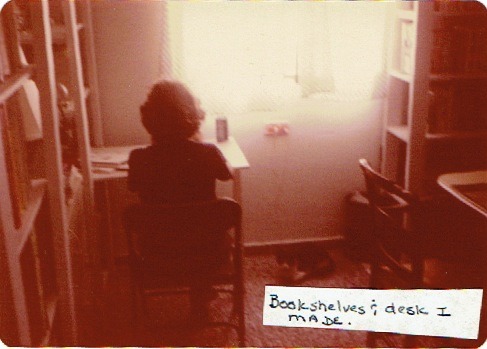
For the record, I love hand-made furniture. Growing up, all the activity in my house swirled around a large, rustic wooden kitchen table. That table was made by hand. By my mom. When she was pregnant with me.
Apparently, she also made a bookshelf. And a desk.
image
Another note:
Katy Waldman, building on this post by Lisa Wade, asks about the flipside of manly drinking: girly drinks.
Waldman makes a couple of great points that further highlight the absurdity of gendered drinking. First, in considering the notion that drinking whiskey is considered “manly” because it involves proving yourself by drinking the hard stuff, she observes, “Other types of self-punishing willpower—the feminized kinds—only attract scorn.” Whiskey is manly because it’s “hard,” but vodka is feminine because… why?
Waldman and Wade also point out that women who transgress gender norms in drink-ordering—who order whiskey at a bar—can be treated as something special. But this isn’t really challenging gender norms, just reinforcing the idea that male-associated drinks are better and more worthy. In ordering whiskey, these girls mark themselves as “cool girls,” setting themselves apart from the other, less cool women who drink, I don’t know, wine coolers.
Waldman writes:
Wade makes a smart observation, which is that while bartenders and waitstaff oftenexpect their female customers to order “juicy or sweet” beverages, those who defy convention with a whiskey neat get vaulted to cool-girl glory. “This is typical for America today,” she writes. “Women are expected to perform femininity, but when they perform masculinity, they are admired and rewarded.”
She’s right. I can still feel the heat shimmer of your judgment, reader. And the side-eye I’m likely to get, asking a waiter for something “refreshing” or “light” (or, God forbid, “bubbly”) is compounded by the approval my female friends draw just by opting for “one of your darker beers, please.” A girl who handles her liquor—and what a weird verb, handle, as if recreational drinking were some kind of beast to manage—seems “down,” chill, hot. She’s almost one of the guys, and in that wordalmost dwell all the mysteries of sex appeal us Schnapps-sucking chicks will never understand.
It seems to me that the healthiest attitude towards gender and drinking is the one expressed by a bartender Waldman quotes, who tells her “But honestly, the women bartenders I work with tend to be a lot less opinionated about this stuff than my male friends. We respect each other’s right to go order a martini and then an old fashioned.”
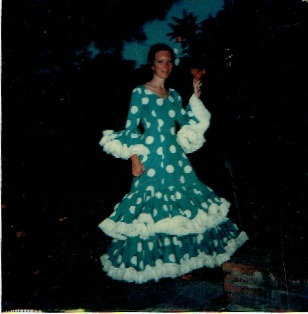
If you like it, drink it. Come to think about it, that was kind of my mom’s approach to crafts: she made the flamenco dress below (she was living in Spain at the time) and she made a table. I don’t think she gave much thought to what either activity said about her gender identity. If she wanted it, and could make it, why not do it?
image

Tuesday, April 29, 2014

The Catholic Church's Real Drinking Problem


Over at the New Yorker, Ian Crouch critiques the Woodford Reserve commercial that ran during the season premiere of AMC’s Mad Men. In that ad, a woman’s voice tells us:
When I see a man drinking bourbon,
I expect him to be the kind who could build me a bookshelf.
But not in the way that one builds a ready-made bookshelf.
He will already know where the lumberyard is.
He’ll get the right amount of wood without having to do math.
He’ll let me use the saw,
and not find it cute that I don’t know how to use the saw.
For Crouch, this represents “a rather old-fashioned statement about gender.” Crouch goes on:
Despite the modern, fashionable feel of its new ads, Woodford Reserve’s definitions of gender are radically narrow, and its sense of the possibilities for human sexuality even narrower. Men must appeal to women, and women to men. To attract women, men have to be rugged and capable while maintaining a perfect veneer of nonchalance. Women can spot a phony or a wimp a mile away. Women, meanwhile, have to be forever good sports, proud of their men’s rough edges and presentable in mixed company with the rowdy boys. The core message is one of stern-faced seriousness: Bourbon defines a man’s world, and women are welcome only if they play by the men’s rules.
For the record, the Woodford spot didn’t really bother me. Even Crouch concedes that “[i]n the pantheon of sexist advertising, Woodford barely merits inclusion.” But the conversation reminded me of this piece I wrote last year about the gendering of drinking, and after reading it I decided to check on Whiskey Catholic, the blog I mentioned in that post.
I want to like Whiskey Catholic. They offer great reviews, they seem supremely knowledgeable, and they write with the jolliness you find in many of the best Catholic writers.
Funny coincidence: the day I checked in, Whiskey Catholic’s most recent post was “Man Skills: Making a Table.” The first line reads: “There’s nothing more romantic than making something for a woman using your own two hands, especially if that something ends up looking better than what you could buy at a department store.”
(I’ve got something to say about the manliness of table-making, but I’ll save that for a follow-up post.)
Anyway, as I flipped through Whiskey Catholic’s posts, I started to think that Robert Christian might be right to say that the Catholic Church has a drinking problem. Don’t get me wrong—I don’t agree that the problem is the one Christian diagnoses. “While engaging in interfaith dialogue,” Christian complains, “the vast majority of thoughtful, virtuous young people I have met from other faiths have been teetotalers (those who abstain from alcohol entirely), while I have witnessed many of my fellow devout Catholics, who are otherwise morally serious, acting foolishly due to their consumption of alcohol.”
I flatly disagree with Christian that the Church should encourage teetotaling. Obviously.
No, for me, the real problem comes when the Church’s insistence on strict complementarianism gets all mashed-up with its love of drinking. What Crouch identifies in the Woodford ads is just a lazy failure to see beyond the gender binary. But in the hands of the writers at Whiskey Catholic, gendered drinking becomes something much worse: dogma.
In other words, for these writers, drinking, which should be liberating, is about reinforcing order. Where drinking could be seen as a way of breaking down divisions and building community, instead it becomes a means of building divisions and excluding others.
Take the “Whiskey Men” designation that Whiskey Catholic bestows on “men who lived fascinating and fruitful lives.” The honor, I guess, is meant as a sort of “Most-Interesting-Man-in-the-World” award, and Whiskey Catholic does write up some amazing stories, like this oneabout the priest who was recently awarded the medal of honor. But the last group of menthey gave the award to was (ahem) the U.S. Bishops, including Charlotte Bishop Peter Jugis who (ahem) “defended the Catechism” after a talk by Sister Jane Laurel that (ahem) “included evidence drawn from scientific studies.” And also Bishop Paprocki for  refusing communion to pro-choice senator Dick Durbin.
This was Bishop Paprocki’s second “Whiskey Man” award; the first time, Whiskey Catholic cheered him for defending (ahem) traditional marriage in a talk in which he apparently told those who disagree with him to become Protestants. Seems to me like only a lousy shepherd would tell his sheep to jump the fence for another pasture, but what do I know?
Or take their series on “The Catholic Gentleman,” in which posts on things like how to tie a bow-tie are interspersed with calls to confront relativism and to persevere in the face of the Supreme Court “giving its tacit endorsement to sodomy and the redefinition of union.”
Essentially, whenever they delve into human sexuality, the writers at Whiskey Catholic are no different from any Catholic Right writers or websites: they build on the same gender essentialism, peddle the same myth of moral decline, make the same self-protective claims that their opponents are irrational, or selfish, or just haven’t given their arguments enough thought.
For them, whiskey just serves this ideology. As Crouch writes about the Woodford ads, “Whiskey is about enacting particular rites of manhood, alone with other men and the ghosts of the manlier men of the past.” That’s almost word-for-word what Taylor Marshall said in his interview with Whiskey Catholic.
Which is disappointing because a proper (ahem) theology of the bottle would actuallychallenge the accepted Catholic dogma regarding human sexuality. As I’ve written before, that dogma is most often expressed in terms of an analogy with eating:
The idea is this: eating and sex both give us pleasure, but both have a vital purpose—nourishment, in the case of eating, and reproduction, in the case of sex.  [Folks on the Catholic Right] argue that when we have deliberately non-procreative sex (sodomy, masturbation, contraceptive sex) we’re separating the pleasure of sex from its vital purpose.  And this is as unnatural as separating the pleasure of eating from its nourishment—which, [they] say, would be like eating a great meal only to intentionally throw it up.
But drinking has a vital purpose, too—hydration—and drinking alcohol works against that. When we ingest liquor we harm ourselves in lots of ways, and open ourselves to all sorts of unnecessary and potentially catastrophic risks. 
That makes no sense under the rubric used to condemn non-procreative sexual activities. It only makes sense if we think about Rowan Williams’ question in “The Body’s Grace”: “But if God made us for joy?”
In other words, it’s impossible to reconcile the puritan, instrumentalist sexual ethic of the Catholic Right with a hearty embrace of alcohol. The best Catholic writers know this, and that tension animates all of their writing on booze. That’s why Chesterton’s “Wine When it is Red” conflicts with the oversimplified Thomist reasoning that undergirds the current Catholic thinking on sex, and it’s why Percy’s “Bourbon, Neat” has more in common with “The Body’s Grace” than the “Theology of the Body.”
Misguided as he is, Robert Christian is absolutely right to question where drinking fits in the current Catholic cosmovision, and he’s right to oppose “GK Chesterton’s pugnacious writings” on alcohol to the teachings of the Church. He gets what the writers at Whiskey Catholic don’t: you have to choose your drinking or your dogmatism, your bottles or your certitude, your whiskey or your self-righteousness.

Wednesday, September 11, 2013

En el ciberc@fe


Cybercafés. Do they still exist? Now that we all carry the internet around with us? I found a reference to one in Enrique Vila-Matas’ París no se acaba nunca, from 2003 (Never Any End to Paris, 2011, translated by Anne McLean). If they’ve disappeared, it wouldn’t be too sad—there’s something disordered about them in the first place, something so antithetical to the spirit of a bar. A waitress comes and takes your order, you mumble something without turning away from the computer screen in front of you. The closest comparison I can think of to them is a bar I know in Fredericksburg where they have video poker, and where one afternoon I watched a woman, a regular, get transfixed by the game. She was there without being part of the group; any time she participated in the conversation at the bar it was in the same disdainful way a teenager responds to her parents from the couch without looking up from her iPhone. 

Still, I have to feel some personal sadness since I went to Spain during the height of the cybercafé’s relevance, in the summer of 2000. That was how I talked to H while she was back in the States: most days, at an appointed hour, adjusted to account for the time difference and her summer work schedule,  I would be hunched over a screen at a  cibercafé in the Huertas neighborhood in Madrid. Chatting. On Yahoo. 

[Note: sometimes she went to a cybercafé, too, the only one in the US I ever heard of. It was in Georgetown, Texas, and it was a “Christian” establishment—which meant that they were vigilant about not allowing anything unseemly on their computers. Which meant there was very little privacy there. Which was ironic, because she only went there when she was staying at her parents’ house in Georgetown and, therefore, needed to get away to get privacy.]

My cybercafé had a decent menu. I usually ordered gazpacho, but I also remember having patatas bravas, and croquetas, and a tortilla sandwich. I think I drank beer there, too, but maybe not. I went to a few other cybercafés when I was out in different parts of the city, too. My second night there, my exchange program met downtown for a get-together night out, a small walking tour followed by drinks. And I remember that the penultimate bar we visited that night was a cybercafé.

Isn’t that funny? It was a night like so many out of books or whatever, a bunch of Americans out in a European capital, drinking too much and then staggering home on the metro. But in the middle of it, we all agreed to pause the merriness and spend a few minutes checking our email, absorbed in the blue glow of the computer screens which (for some reason I remember) were embedded in the tables of this bar. Then, finishing one-by-one, we each patiently waited for the others to complete their business. We came back together at the bar’s vestibule, a mass of young people heading rosily back out in the summer night.

Anyway, the reference from Enrique Vila-Matas comes early in the novel: the protagonist and his wife are trying to find the Dingo Bar, where Hemingway supposedly met Fitzgerald, on the Rue Delambre in Paris. The wife says, "You know what, I'm going to look up the Dingo on the internet, I'll go to that internet café on the corner..." The bar is gone, but the fact that they find it on the internet is I guess a commentary on how we've moved our lives online. Still, it already feels like a pretty dated detail to me.

Saturday, August 31, 2013

One can learn about wines and pursue the education of one's palate with great enjoyment all of a lifetime, the palate becoming more educated and capable of appreciation and you having constantly increasing enjoyment and appreciation of wine enough though the kidneys may weaken, the big toe become painful, the finger joints stiffen, until finally, just when you love it the most you are finally forbidden wine entirely. Just as the eye which is only a good healthy instrument to start with becomes, even though it is no longer strong and is weakened and worn by excesses, capable of transmitting constantly greater enjoyment to the brain because of the knowledge or ability to see that it has acquired. Our bodies all wear out in some way and we die, and I would rather have a palate that will give me the pleasure of enjoying completely a Chateaux Margaux or a Haut Brion, even though excesses indulged in in the acquiring of it has brought a liver that will not allow me to drink Richebourg, Corton, or Chambertin, than to have the corrugated iron internals of my boyhood when all red wines were bitter except port and drinking was the process of getting down enough of anything to make you feel reckless. The thing, of course, is to avoid having to give up wine entirely just as, with the eye, it is to avoid going blind. But there seems to be much luck in all these things and no man can avoid death by honest effort nor say what use any part of his body will bear until he tries it.
Ernest Hemingway, Death in the Afternoon

Saturday, August 17, 2013

Taylor Marshall on Drinking and Marijuana


At his blog, Thomistic scholar Taylor Marshall argues that smoking pot is immoral/unnatural because it’s analogous to drunkenness, which dulls a man’s powers of reason and therefore is a sin. Marshall, who enjoys his single malt, says a little bit of drinking is fine, but there’s a line between being “merry at heart” and being “drunk as a skunk.” And that line is where drinking starts to diminish your rational capacities.

Nothing against weed, but since it’s not the thrust of this blog, I want to focus on the argument Marshall makes regarding alcohol.

Marshall writes:

Humans use logic. We are rational. We have an intellect. Humans play chess. Humans follow the rules of grammar. Humans build suspension bridges. Humans paint images. Humans travel to the moon and back. Humans write novels. This is what makes humans like God and the angels. Our logical, rational, intellect is the greatest gift that God granted our species.

Then he goes on, “Drunkenness is evil because it blurs and muddies our highest faculty – rationality. Think about it. When a person is drunk, he resorts to how animals act. Drunk people act irrationally.”

Here’s his first mistake. Drunk people don’t act like animals. True, animals aren’t rational, but their actions are almost always rationally explainable in relation to a few simple urges: self-preservation, reproduction, etc. Drunk people are, um, less predictable. Which is why the next morning for them sometimes looks like this:


G.K. Chesterton gets this. In “Wine When It Is Red,” Chesterton writes: “The real case against drunkenness is not that it calls up the beast, but that it calls up the Devil. It does not call up the beast, and if it did it would not matter much, as a rule; the beast is a harmless and rather amiable creature, as anybody can see by watching cattle.”

Cattle don’t generally wake up in hotel rooms with tigers and strippers and human babies.

Marshall's second mistake is thinking he can draw a bright line between being "merry" and being "drunk," and that that line comes with the diminishment of rationality. All drinking diminishes our capacity for reason--that's the deal you make when you slug back that shot.  What Marshall really means is that proper drinking doesn't diminish our rationality too much.

Which is fine to say, but a difficult guide in practice. Especially since the act of drinking itself makes it harder to reason about whether or not the next drink is a good idea. After all, most people who end up "drunk" started out aiming to get "merry."

Besides, I think Marshall kind of misses the point. You can't drink well if you're always worried about drinking sensibly, because drinking well sometimes means letting go of being sensible.

Chesterton agrees. "Certainly," he writes, "the safest way to drink is to drink carelessly."

In a 1969 interview with the Paris Review, the poet Robert Graves said that "The academic never goes to sleep logically, he always stays awake. By doing so, he deprives himself of sleep. And he misses the whole thing, you see."

That's part of what Chesterton's getting at. Drinking, at its best, is a shrugging off of responsibility, of care, of the need for logic. That's the joy of a happy hour at the end of a workday, or of a few glasses of champagne at a wedding. It's a way of saying Let's be useless for a while.

And this is a good thing. Look again at Marshall's list of things that mark us as human: writing novels, painting images, traveling to the moon and back. Marshall's right, we wouldn't do those things if we were animals. But we also wouldn't do them if we were totally logical, if we only focused on doing what was useful or what made logical sense.

The trick is to do these things so that they call up the angels and not the devil. I'm not saying that's easy, or that there's no risk involved. "All the human things are more dangerous than anything that affects the beasts," says Chesterton. But when it comes to drinking (or anything useless) the risk is mixed up with the good. And what you can't do--what I think Marshall is trying to do--is seal off one from the other.

Thursday, July 25, 2013

Nonsecular Girl's "Sermon for Brokenness"

Oscar Wilde: "I drink to separate my body from my soul."

Casey Fleming's response:

Imagine our bodies, healthy or sick or momentarily struggling, as the light of God.
Imagine we might need affliction to illuminate our souls.  (know, in this imagining, the unfairness of such a reality on some, truly sick people)
Imagine we could not have a soul without a body.
Imagine the necessity of Jesus’ human body.
Then the body cannot be a shade of shame or a thing to denounce.  Then the body cannot be a cage, and drinking, dear Oscar Wilde, might be more for marrying our bodies to our souls than separating them.  Then the body has no use for a language of signs and signals and acronyms.
The flesh is the word, the word is the flesh.
Even, and especially, when the flesh is broken.
The whole thing is gorgeous. And it includes readings from Christian Wiman and Mark Doty, two poets with deep connections to Texas.